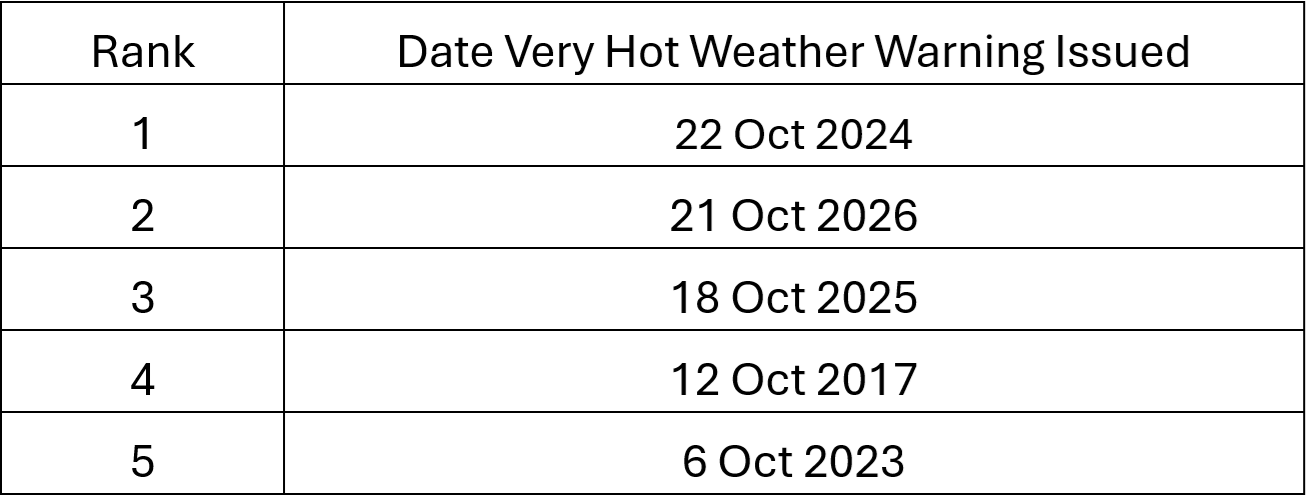
Hong Kong recorded record-breaking heat in October. The monthly mean temperature reached 27.6°C, as much as 2.0°C above the normal 25.7°C (Table 1). The mean daily maximum temperature also rose to 30.5°C, 2.4°C above normal (Table 2). In addition, there were 20 days in October when the maximum temperature reached 30°C or above, the highest figure in nearly four decades. The Hong Kong Observatory issued a Very Hot Weather Warning on 21 October, the second latest such warning on record (Table 3). Dr. Cheng Luk-ki, Director of Green Power, said Hong Kong is experiencing a very strong El Niño and urged all sectors to step up preparedness for high temperatures and other extreme weather.
Dr. Cheng noted that as early as August, based on temperature data from Hong Kong’s previous two very strong El Niño events, he projected that Hong Kong’s average temperature this autumn might reach a record-high 27°C. In September and October, Hong Kong's monthly mean temperatures were 28.8°C and 27.7°C respectively. Dr. Cheng further forecasts that the average temperature for the entire autumn season (September to November) this year is likely to set another record.
Warming seas: an overlooked impact
Dr. Cheng emphasized that with the onset of a very strong El Niño, most public attention has focused on its role in driving Hong Kong's extreme heat. However, the impacts of rising sea surface temperatures have long been overlooked—despite the fact that they are already affecting the city.
Dr. Cheng explained that due to large-scale human greenhouse gas emissions, the ocean continues to absorb heat. A recent study by international meteorologists (1) pointed out that land surface temperatures in coastal cities are linked to sea surface temperatures in adjacent waters. In Hong Kong, sea surface temperatures in October reached a new high: at Waglan Island, the average water temperature in October was 28.2°C, the highest October sea temperature since 1990. "This October, Hong Kong experienced sea breezes on most days (i.e., easterly or southerly winds), continuously bringing warm air from the sea to land—one of the reasons temperatures remained persistently high," Dr. Cheng said.
Dr. Cheng added that climate change not only alters weather patterns; it is also gradually changing the ocean. The ocean, in turn, further influences weather, creating a feedback loop. This year's very strong El Niño highlights how interactions between the atmosphere and the ocean can affect Hong Kong. Warming seas will not only continue to push up temperatures in coastal cities, but may also intensify heatwaves and prolong their duration. Authorities must not underestimate the complexity of the problem, and should begin preparing society as early as possible to cope comprehensively with extreme weather.
Table 1: Ranking of October Mean Temperatures (1884–2025)
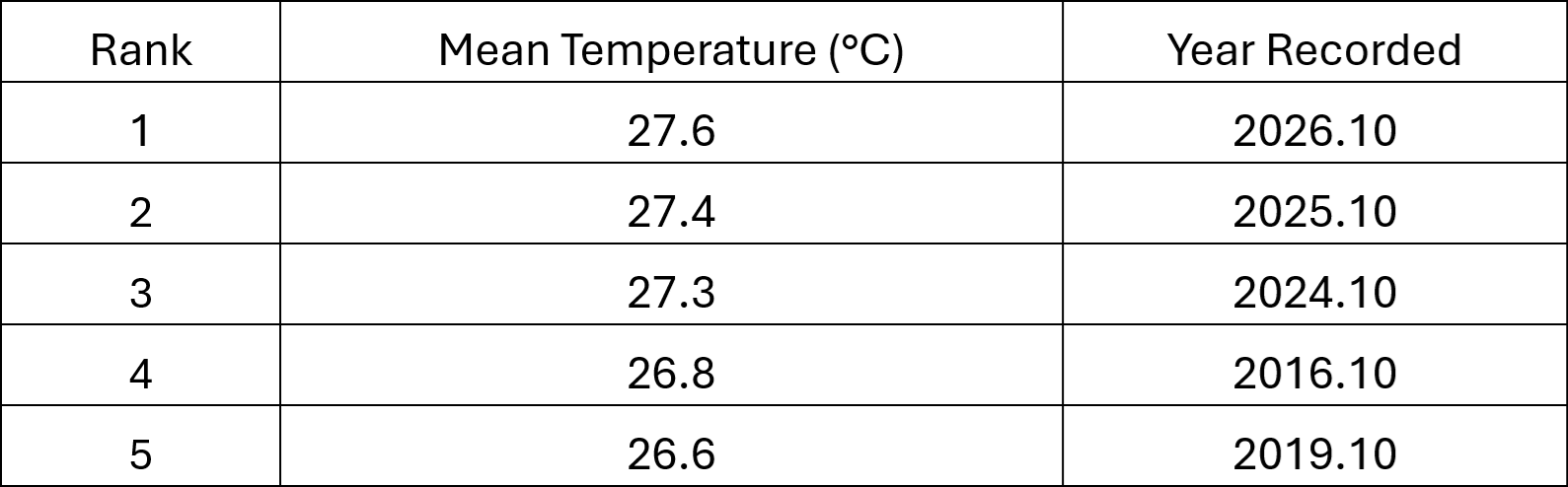
Table 2: Ranking of October Mean Maximum Temperatures (1884–2025)
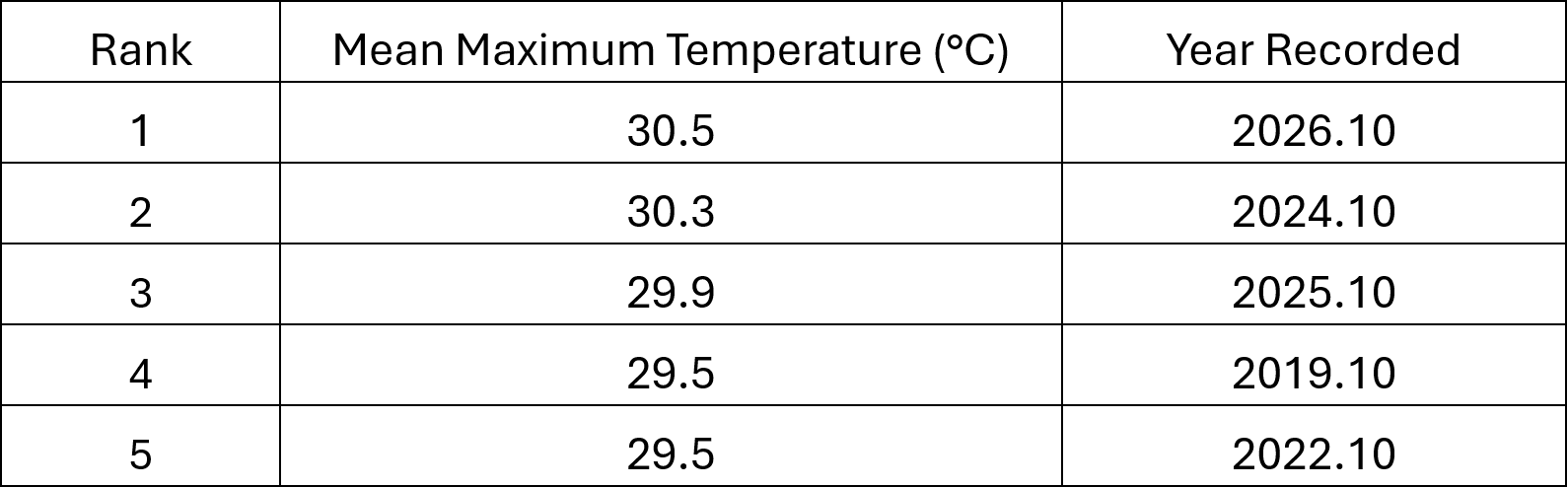
Table 3: Ranking of Latest Issuance Dates for the Very Hot Weather Warning (1884–2025)
(1) Moazzam, M.F.U.; Lee, B.G.; Kim, S. Impact of Sea Surface Temperature on City Temperature near Warm and Cold Ocean Currents in Summer Season for Northern Hemisphere. Atmosphere. 2025, 16(1), 54; https://doi.org/10.3390/atmos16010054