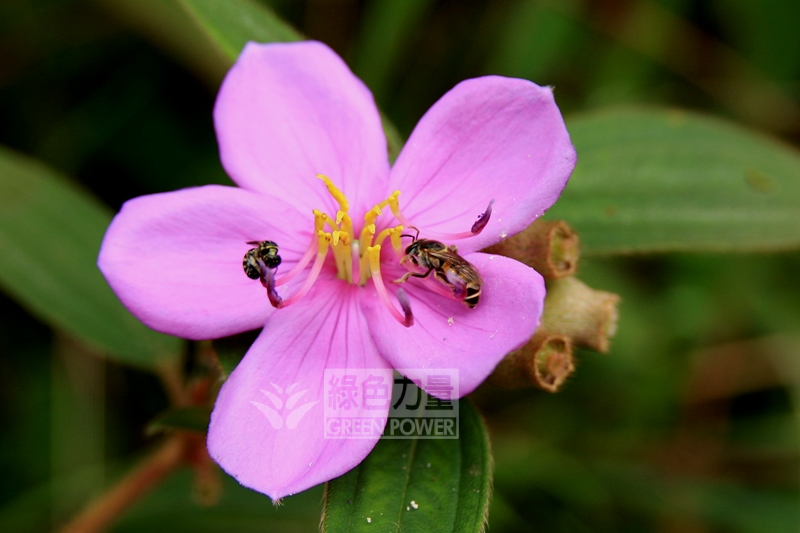
The Hardy Pioneer - Common Melastoma


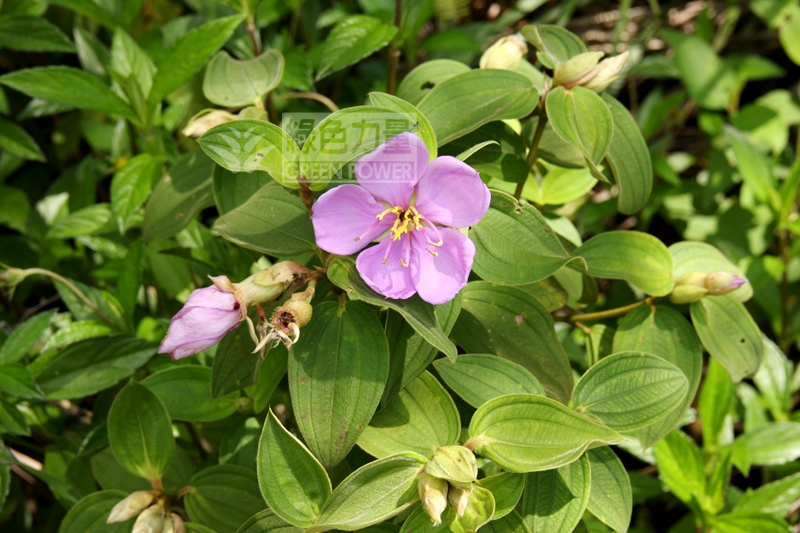
Every spring and summer, the large and vivid mauve or rose-red, sometimes white, blooms of Common Melastoma (Melastoma malabathricum) charm many who see them. As an ornamental plant, it has been prized for its adaptability, typically one of the first "pioneer species" to colonise a barren land, and thus plays a crucial role in ecological succession.
Common Melastoma is a popular plant in Hong Kong's countryside. It grows on hillsides, grasslands, thickets and margins of secondary forests. The small evergreen shrub can grow to a height between 0.5 and 1.5 metres.
Beyond Hong Kong, Common Melastoma is widely distributed in subtropical and tropical regions, from Indochina to Southeast Asia, South China, Taiwan, the Philippines, even as far as norther Australia and islands in the Pacific Ocean.
The prevalence of Common Melastoma is a natural outcome of its superb adaptability. It can tolerate fierce tropical light and cyclic drought by virtue of a dense felt of scaly bristles covering all over it. The hairs function as a "protective film" for a variety of purposes, e.g. reducing excessive transpiration, reflecting part of sun rays and protecting its stalks and leaves from bites by tiny insects.
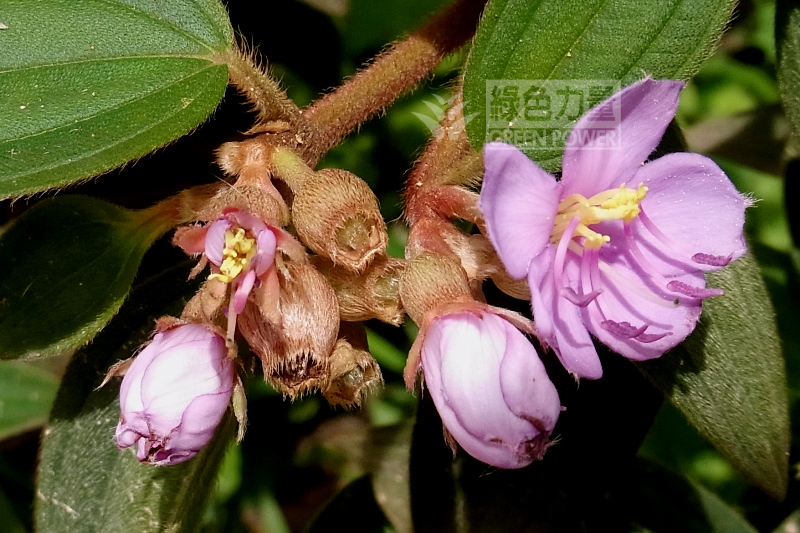
First settlers
Common Melastoma is remarkably adaptable. Its incredible resilience in acidic and infertile soils makes it typically one of the first "pioneer species" to grow in a barren land. It takes root, sprouts and locks soils in place with its extensive root system to prevent erosion in an arid and acidic land. Its lush foliage helps reduce flooding and terrestrial runoff. Its leaf litter provides an organic cover – humus layer - to the desolate hillside, and thus offers nutrients and shade for the growing of tree seedlings. Common Melastoma plays a crucial role in forest succession for its ability to improve soil fertility.
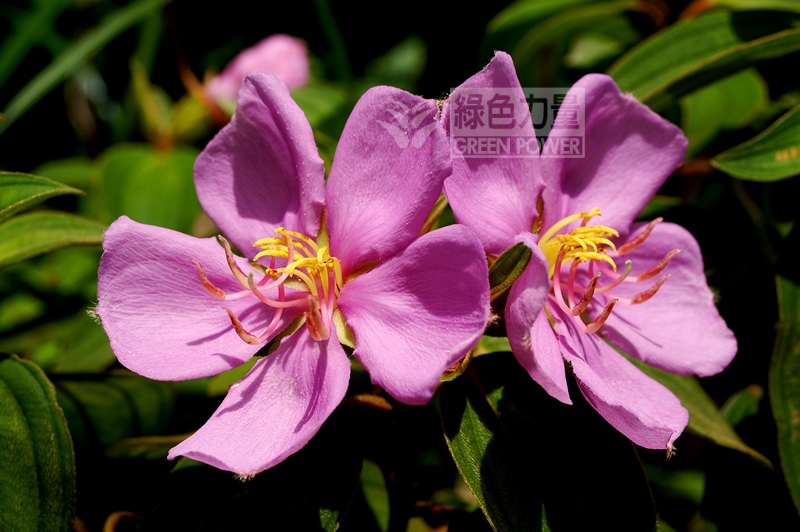
Efficient pollination
Most plants rely on insects to pollinate and Common Melastoma is no exception. Nonetheless, it has developed a buzz pollination strategy to increase pollination efficiency.
Common Melastoma's pollen is wrapped in thick and tubular anthers which release them from pores at the tips under specific circumstances. Bees are the main insect pollinators of Hong Kong's Common Melastoma. When bees land on the flowers, they contract thorax muscles furiously to produce resonant high-frequency vibrations that trigger the anthers to shoot out pollen from the apex through the pores onto bees' bodies. Pollen gets carried to another plant by the pollen-powdered bees as they flit from flower to flower. Buzz pollination provides insurance against pollen theft by tiny insects and guarantees fertilisation by the most reliable pollinators for Common Melastoma.